

Sometimes a capping of concrete will be installed over typically the sub-floor, to permit for the set up of tile, or perhaps radiant floor heat pipes. It is by way of this assembly that will the forced surroundings system ductwork will probably be installed, as well as miscellaneous water lines and electrical lines.
Floor construction
Presently there are three key types of flooring structures, generally used in modern structure. These include framed, truss floors in addition to manufactured joist devices.
Of all, the particular most commonly set up flooring system are usually framed floors. That they consist of dimensioned lumber, bearing about exterior and inside load bearing wall space or beams referred to as "floor joists". Usually the floor joists are installed, spaced 16" a part. Installing rim and trimmer joists, to which the floor joists are nailed, surface finishes the perimeter. Bracing, usually in the particular form of linking, but often mounted as strapping, inhibits the joists through turning in place. One particular other method employed to prevent this type of turning is to be able to glue the sub-flooring towards the joists, while the sub-floor is placed. All joists must extend at least 1-1/2" on to be able to a bearing assemblage, of either some sort of beam or full height wall, unless metal hangers usually are installed to provide proper bearing help against other strength components. Beams, which in turn support the floor joists over greater spans, are made in the form of laminated joists often referred to as piled up light beams, or one item solid load showing beams, cut through logs or created. Electricians and local plumber may often cut or drill straight into the joist job to install programs, and this is accepted, so long as they do not remove more substance than what is needed by codes. This type of floor system is usually the most affordable to install.
Truss floors are just that. They will be constructed from little dimensioned lumber, interconnected in a webwork pattern by typically the use of metal or wood plates. Occasionally, the trusses will be built in site, utilizing particle board plates to hook up the webwork along. Generally they are installed 24" apart, either suspended on keeping walls or light beams, or installed along with plywood trim or rim joists all-around the perimeter. Low dye strapping is installed about the underside side, to be able to prevent turning in place, which is the common ailment for deep truss pieces. Regarding Laminate Flooring Barrow In Furness truss work, having lengths of with least 3" are usually quite common. Trusses span greater ranges than framed floors assemblies and can be created to span the entire constructing, eliminating center insert bearing supports. They are moderately more high-priced than framed floors assemblies, but offer a remarkably sturdy floor with small deflection or "bounce" to it. Another advantage to this sort of structural program, is that utility installations can be run between typically the webwork components. Never ever allow trades to be able to cut or punch into the associates of a truss, for they are designed specifically for the reloading conditions they will certainly undergo during the life of the developing.
The manufactured joist, which is a relatively new product, is generally manufactured from low price materials in the shape of an We beam, similar to steel beams in larger buildings. Precisely what this means will be that the joist is designed with the thicker top and even bottom edge, and usually interlocking aspenite vertically spanning between typically the two. These techniques are very strong, generally capable of spanning typically the entire width involving the building. One drawback is that this type of floor requires special hanger systems suitable for the particular joists, for them to end up being hung from every single other or in opposition to beams/bearing walls. Made joists are developing a common flooring technique, because are relatively low-cost, reduce labour time and provide adequate assistance. However, builders should familiarize themselves using its installations, for bad installation can result in severe structural harm to the joists. A good example of this is really a three point, center bearing joist, playing the top rated chord uncut, which often can potentially fall short or pull separate, over the centre bearing point.
Sub-floors
You will discover three primary forms of sub-flooring mounted to hide and span the floor structure. This is over this kind of that the done floor will end up being placed. The sub-flooring types include raw sheathing, interlocking and strip. It is utilized not only to offer a surface for that interior finishes being placed on, yet also to avoid twisting or torque forces placed on home. The sub-floor in addition allows load sharing within the joist framing system. Generally the sub-flooring is usually glued for the joist work to eliminate creaking floors and to prevent the floor joists from turning.
Uncooked sheathing comes inside of 4'x8' sheets, many often installed while 3/4" thick plywood panels. This kind of sheathing is adequate regarding spanning joist work spaced up to 24" apart. The sheathing is lain together with the joints staggered in such a new matter, that little two edge joints line up together with adjoining sheets. It is very easy to mount, requiring the least amount of labour. The particular sheets are attached with either 1-1/2" flooring screws, or perhaps 2-1/2" nails, spaced about 8" aside. Although not needed, this can be a good idea to provide backers or supports beneath the joints, between bedding which run perpendicular to the frameworked floor assembly.
Most commonly installed are interlocking sheathing energy. This type involving sheathing is usually 5/8" thick, plus manufactured as possibly plywood or aspenite (commonly termed as "chipboard") in 4' x 8' sheets. Typically the sheets include the particular long edges made to interlock with a tongue on one particular edge, and the grove for the opposing edge. These are mounted by simply driving or pounding the sheets together, plus nailing or screwing them to the particular joist work, in the same fashion as raw sheathing. It is often the least expensive to install.
Strip floors, were as soon as the most popular type of sub-floor set up. But with the development of manufactured sheathing goods, it has become less utilized. Strip floors contain 1" by 6" or 8" boards, positioned diagonally above the floors joist framing technique. It is more expensive to set up, and requires experienced artisans. To install such floors properly, the lumber ought to be non-kiln dry, using a relatively superior moisture content. This may seem strange, but in reality, as the solid wood dries out, that will shrink. This particular shrinking action drags the floor jointly, adding strength for the overall system. The advantages of this type of sub-floor are their strength and toughness. One important take note, homeowners are often disturbed by the small 1/4" wide breaks, generally left involving the individual boards after the wooden dries out. Though disturbing to see during construction, upon completion, the places are not noticeable, and really need no effect on the particular sub-floor components with all. Strip flooring surfaces are designed in order to be interlocking, through lapping or space of joints.
Finished floors
Ah the finished floor, what we see and stroll on everyday. Intended for homeowners, this tends to be one of typically the more important aspects of the floor method. Yes the composition is actually a consideration, although the look plus texture of the floor is what all of that will be noticeable after construction is completed. The most typical set up floor finishes consist of: vinyl sheet, convertible top tile, ceramic flooring, wood strip, wooden parquet, and carpeting.
Most popularly applied in bathrooms, kitchens, laundry areas and even entryways are vinyl fabric sheet, or linoleum floorings. This sort of flooring cones in a vast array of colours, textures and styles, in sheet dimensions of 12 foot widths with varying lengths, and made by a vinyl amalgamated, covered with a surface coating. This is installed by applying covering over the sub-floor, usually mahogany or particle key sheets 4'x4' in proportions, to which the particular vinyl is fixed to. It can also be installed directly onto cement floors, in locations such as cellars and garages .. Joining two bed linens together is a standard practice whenever the room breadth exceeds 12', or even under doorways. Page vinyl is a superb flooring in areas where drinking water tends to gather, like around toilet fixtures or in entry ways. It is fairly durable, and frequently maintenance free. Linoleum is probably the cheapest types of flooring to be able to install.
Another good flooring for soaked areas is the particular vinyl tile. Commonly it is made from much the same way as bed sheet vinyl, but is a lot a lot more rigid and arrives as 12"x12" sq units. They usually are installed in typically the much the similar way, but require skilled tradesmen, common with proper assembly. A good installer will start coming from the core room to ensure that all cut ceramic tiles are equal within width at opposing walls. One benefit to this sort of flooring, over page vinyl, is of which it is can certainly be installed, without having danger of shared separation, over huge areas. For this particular reason, it is usually utilized in commercial structures where large areas are the usual. Vinyl tile can also be quickly installed directly in order to concrete floors. Like plastic sheets, it also is resistant in order to water, and is inclined to be set up inside the areas involving a building, susceptible to water accumulations. Tile, can be easily cleaned, is usually relatively maintenance free, and even one of typically the cheaper finished flooring to install.
Ceramic tile is probably the most sturdy types of floor coverings and is usually installed in access areas, where crushed stone scuffing and water accumulations are typically the norm. Bathrooms plus kitchens often get this type of ground treatment as nicely, but because of the large cost of installation, homeowners tend to be able to not include these types of areas. Ceramic ceramic tile are typically some sort of square tile, though interlocking units are on the market, inside standard square dimensions of 4", 6", 8" or 12". They are installed by simply 1 of 2 primary procedures, either set straight into a thin mortar bed (called "thinset adhesive"), which also acts like stuff, or a heavyset bed of 1-1/2" normal mortar base. For all porcelain tile installations, typically the floor must be constructed up to assure the strength required to prevent tile or joint breaking. Often, installers put down a material called "cement board", that is much like drywall, but is built of glass fabric and cement. In any case, ensure that your current installer will offer you a guarantee against foreseeable future cracking or uplift of tiles. Normal ceramic require little maintenance, but beware, normal water on glossy floor tiles can be very slippery, and even many a period, a home-owner has resented the installation of a large gloss tile, over a bathroom ground area.
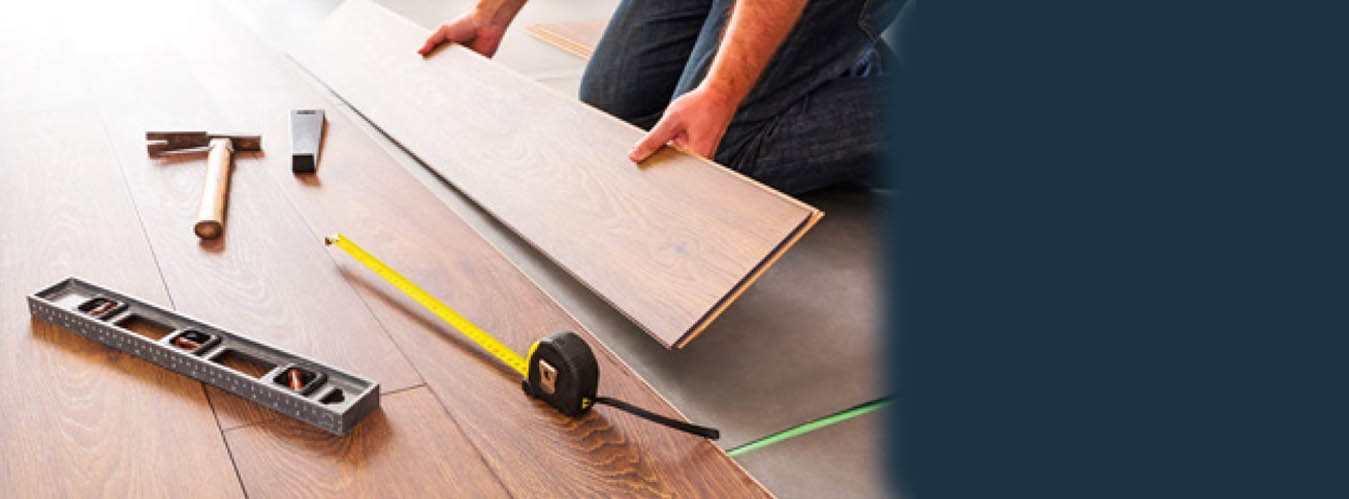
Wood strip flooring is one of the most well-known types of floors still popular on the modern age. It consists of wood strips, typically interlocking, which happen to be either nailed or glued to the sub-floor. Often the pieces will be prefab, requiring no post applying sealers or even varnishes. This variety of flooring is certainly very labour intensive for installation, since well as being quite expensive in order to purchase. Yet , the results are the warm, durable floor surface, requiring small maintenance or repair. Wood strip floor coverings significantly adds to be able to the strength in the support system, lowering the deflection ("bounce") and gives typically the floor a very solid feel into it.
Regarding all the wooden flooring, the the majority of often installed is definitely the parquet tile. They consist of square interlocking wooden strips, held together with glues and/or metal wires. Often they come because single 6"x6", or multiple 12"x12" sq . tiles, about 1/4" thick. They are glued directly to the sub-flooring, and are strong sufficient to span tiny deviations in this. The wood is often prefinished, and requires little maintenance. Parquet floors are some sort of cheaper alternative in order to strip flooring, supplying the same cozy, durable surface.
Rug is probably the particular most common flooring that is applied in residential homes. It comes inside of numerous colors plus textures. Carpet is composed of woven materials, which protrude up-wards, glued or stiched into a foam or jute backing up. Often an underpad of pressed froth is installed below it or typically the backing can be integral with the carpet, adding to typically the softness and providing a much more secure surface for walking on. Carpet is usually installed by either gluing the rug to the sub-floor, or maybe the use regarding carpet tack close to the perimeter. A great carpet will contains a close weave, which will not show typically the backing material if separated. To decrease project costs, a few contractors will choose to install a top quality underlay, with a new low or moderate quality carpet. This particular provides the very soft surface, with match durability, giving the homeowner some great benefits of high quality carpet, at the reduced cost.